Smarter oncology second opinion — AI-powered, expert-reviewed, using your existing NGS report.
Read More


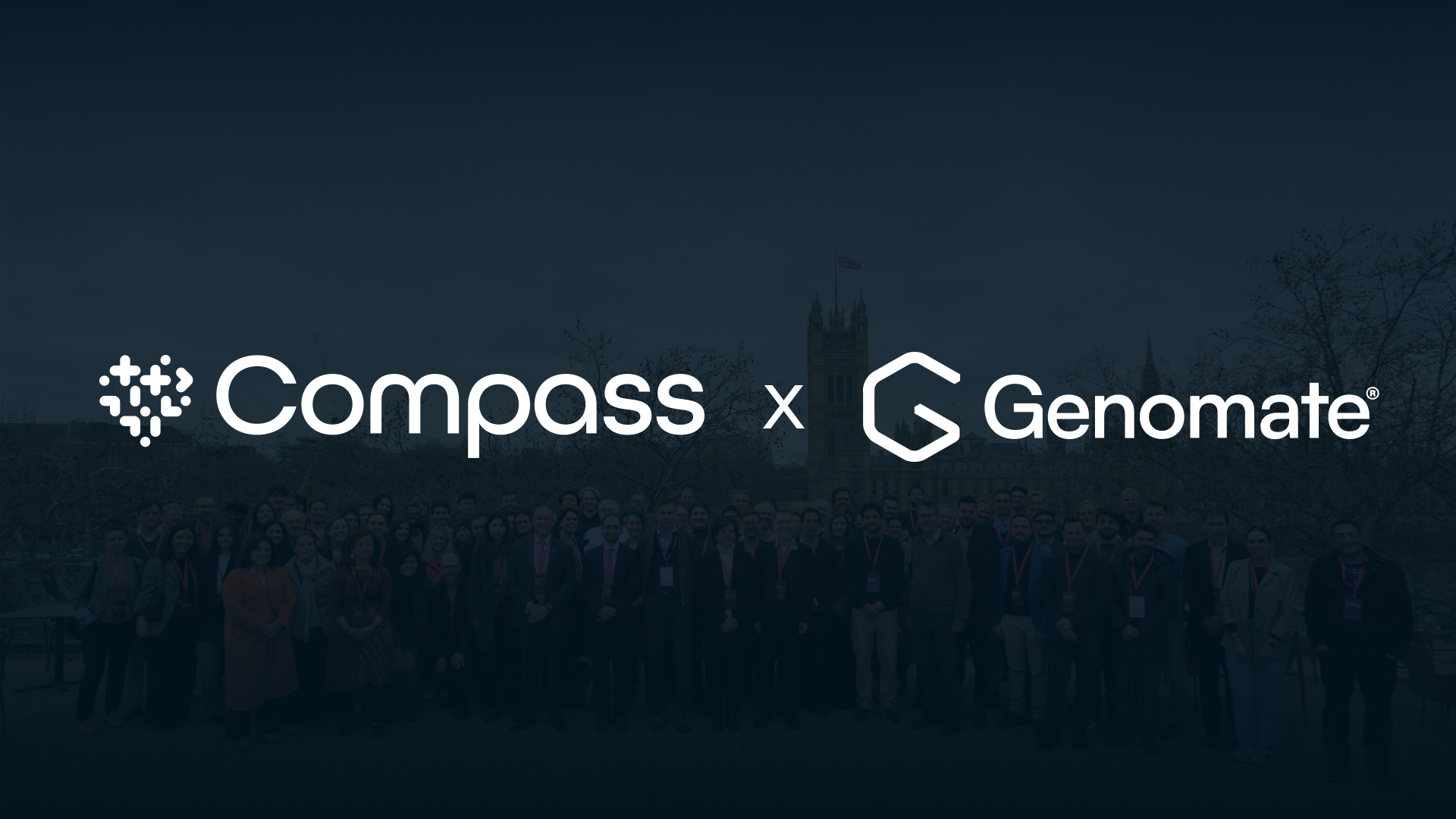
As part of a 60+ partners European consortium, Genomate Health brings its computational reasoning platform to support earlier detection and more personalised management of cardiovascular risks in cancer patients.
Genomate Health, a precision oncology company specialising in computational reasoning, has joined the COMPASS (Cardio-Oncology Multidisciplinary Patient ASsistance Solution) project, one of Europe’s largest collaborative initiatives focused on improving cardiovascular outcomes in cancer patients. Funded by the European Union under the Innovative Health Initiative (IHI), the €50 million project brings together more than 60 partners across 25 countries to develop integrated approaches to cardio-oncology care.
As cancer survival rates improve, the long-term effects of treatment, particularly cardiovascular complications, are becoming an increasingly urgent challenge. One in four anticancer therapies has been associated with cardiac or vascular side effects, highlighting the need for earlier detection and more coordinated care pathways.
Within the COMPASS project, Genomate Health will contribute its computational reasoning platform, Genomate®, to support clinical decision-making in cardio-oncology. By integrating complex molecular, clinical, and imaging data, it aims to enable a more comprehensive understanding of patient-specific risk profiles and treatment pathways.
Unlike traditional artificial intelligence approaches, Genomate’s technology uses computational reasoning to model the full biological and clinical context of each patient. This enables more precise, transparent, and clinically actionable insights, supporting healthcare professionals in balancing cancer treatment effectiveness with long-term cardiovascular safety.
“Cardio-oncology requires a fundamentally new approach to understanding each patient, not as a set of isolated data points, but as a complete biological and clinical system,” said Barbara Vodicska, PhD, Head of Translational Science at Genomate Health. “Through computational reasoning, we aim to support clinicians in making more context-aware decisions that improve both cancer outcomes and long-term heart health.”
The COMPASS project officially launched on 1 March 2026, with a consortium meeting held on 26–27 March in London, hosted by King’s College London at St Thomas’ Hospital. The project will run for five years and will include clinical trials and research activities focused on imaging, biomarkers, and long-term patient follow-up. The consortium brings together hospitals, research centres, universities, MedTech companies, SMEs, and patient organisations, with academic coordination led by King’s College London and industrial leadership from GE HealthCare. By combining scientific excellence with real-world clinical expertise, COMPASS aims to:
Beyond technology, COMPASS will strengthen collaboration between cardiologists, oncologists and other healthcare professionals, supporting better coordination across cardio-oncology care. The project will contribute to the development of integrated and sustainable care pathways through national collaboration models across Europe, helping improve how cardiovascular risks linked to cancer treatments are managed over time. It will also design long-term follow-up pathways to support the growing number of cancer survivors and protect their heart health beyond active treatment. To ensure lasting impact, COMPASS will assess the sustainability and long-term adoption of its solutions, helping ensure that successful innovations can be integrated into healthcare systems and used beyond the lifetime of the project. Steve Archibald, Professor in Molecular Imaging at the School of Biomedical Engineering & Imaging Sciences at King’s College London, underlined:
“King’s College London is looking forward to providing academic leadership and scientific coordination to COMPASS, harnessing the consortium expertise across cardiology, oncology, molecular science, big data and AI to address the increasing challenge in cardiotoxicity in cancer care. We aim to promote integrated care models to drive widespread adoption across healthcare systems.”
Participation in COMPASS marks an important step in extending Genomate Health’s computational reasoning platform beyond oncology into broader, multi-disciplinary care settings, where clinical decisions depend on understanding complex interactions across diseases, treatments, and long-term patient outcomes.
In cardio-oncology, these challenges are particularly acute: treatment decisions must balance cancer efficacy with cardiovascular risk, often based on incomplete or fragmented data. By enabling a unified, model-based representation of each patient’s biological and clinical profile, the Genomate® approach supports more coherent, system-level decision-making across specialties. This capability is critical to the next generation of clinical decision support systems, moving from isolated predictions toward integrated reasoning that reflects the full trajectory of disease and care.
Beyond the project itself, this work reinforces Genomate’s broader mission: to enable a shift from reactive, siloed healthcare toward proactive, continuously informed care, where decisions are not only data-driven, but context-aware and aligned with the long-term well-being of each patient.
The COMPASS (Cardio-Oncology Multidisciplinary Patient Assistance Solution) project is co-funded under the Horizon Europe framework as part of IHI, a public-private partnership between the European Union and the European life sciences industry. The Joint Undertaking (IHI JU) under grant agreement Nr. #101253264 receives support from the European Union’s Horizon Europe research and innovation program and from COCIR, EFPIA, Europa Bío, MedTech Europe, Vaccines Europe, and COMPASS contributing partners. With a total budget of over €50 million, the project brings together more than 60 partners from 25 countries to advance innovation in cardio-oncology care. The grant agreement was signed on March 25, 2026, and runs through the next five years. For more information and for the full list of consortium members, please visit the IHI website.
.avif)